
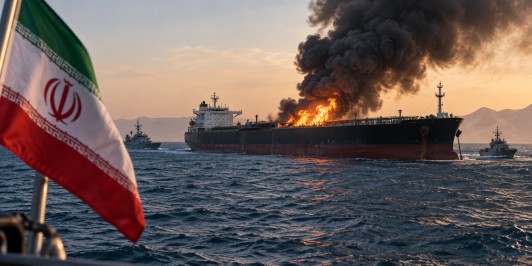
The Islamic Revolutionary Guard Corps (IRGC) of Iran reported a significant incident involving an oil tanker named EL GAIA, which caught fire after striking naval mines while attempting to navigate the Strait of Hormuz. This incident took place on a route that Iranian authorities had explicitly prohibited. The IRGC Navy noted that the tanker was using a restricted pathway south of this crucial waterway when the unfortunate event occurred, and efforts to extinguish the flames were reportedly unsuccessful.
Authorities had previously issued warnings about the dangers associated with using the prohibited route, emphasizing that the Strait of Hormuz remains under the strict control of Iranian naval forces. The IRGC reiterated the closure of the strait to unauthorized passage, highlighting the enforcement of these measures to prevent further incidents. Additionally, Iran’s Persian Gulf Strait Authority has cautioned insurance companies, protection and indemnity insurers, and classification societies against offering services to vessels identified as violating these maritime restrictions.
The Strait of Hormuz is a pivotal energy conduit, responsible for transporting a substantial portion of the world’s oil and gas supplies. The imposition of shipping restrictions through this waterway has prompted concerns about potential disruptions to international energy markets. As a result, the global community is closely monitoring the situation, given the strategic significance of the strait in facilitating energy trade.
In the wake of US-Israeli strikes on Iran on February 28, Iran has intensified its control over movements through the Strait of Hormuz. Concurrently, US forces have enacted a naval blockade targeting vessels navigating to and from Iranian ports. This development has further escalated tensions in the region, with implications for maritime security and the stability of energy supply lines.