
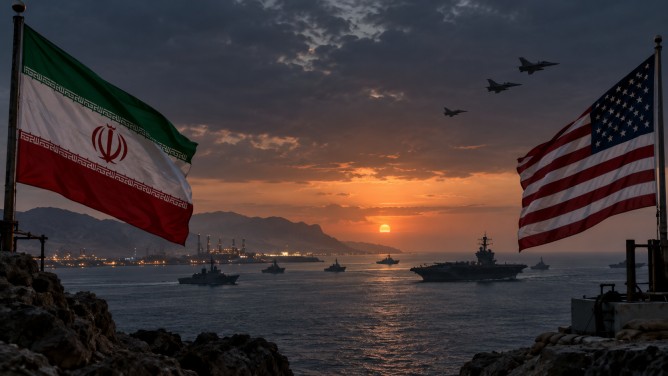
The escalating tensions between Iran and the United States have heightened concerns over Middle Eastern stability and global energy supplies, as both nations exchange threats amid ongoing conflicts. The situation poses significant risks for international oil markets, with critical routes like the Strait of Hormuz facing potential disruptions.
In recent developments, U.S. President Donald Trump warned Iran of severe repercussions if it refuses to engage in negotiations, while Iran’s military vowed to retaliate against any new U.S. attacks. This exchange of threats has intensified the already volatile situation, with Iran cautioning that countries supporting U.S. actions might also be considered adversaries.
Amid these tensions, Trump expressed willingness to meet Iranian President Masoud Pezeshkian at the United Nations General Assembly in New York, suggesting a potential diplomatic avenue despite the current hostilities. This openness to dialogue highlights the complex interplay of confrontation and negotiation that characterizes U.S.-Iran relations.
Meanwhile, the conflict’s regional impact is evident as Yemen’s Houthi movement steps up its offensive against Saudi Arabia. The Houthis have claimed responsibility for missile and drone attacks targeting Riyadh and an oil facility in Yanbu. Saudi defensive measures reportedly intercepted a missile bound for Riyadh, underscoring the heightened security challenges in the region.
The ongoing hostilities have exacerbated fears over the security of key maritime routes, particularly the Red Sea coast and Bab el-Mandeb Strait, where Houthi activity threatens commercial shipping. Coupled with the strategic importance of the Strait of Hormuz, these tensions have contributed to fluctuating oil prices, although a slight easing occurred on September 21 as markets considered the potential for renewed diplomatic efforts.