
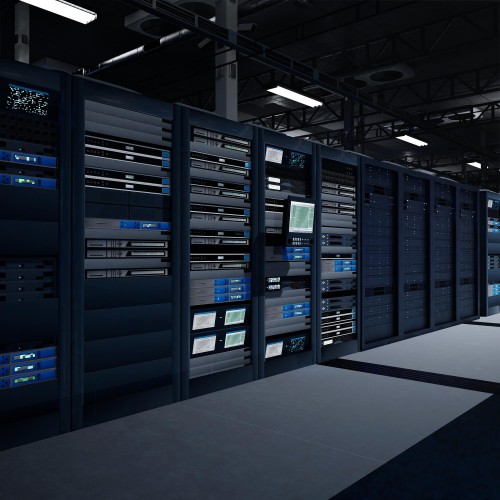
China has reemerged as a leader in the global supercomputer arena with the unveiling of its LineShine system, now ranked as the world’s most powerful. This achievement represents a significant milestone in China’s journey toward advancing its homegrown computing technologies. Despite this progress, specialists caution that this development does not necessarily imply that China has surpassed the United States in artificial intelligence capabilities.
Situated at the National Supercomputing Centre in Shenzhen, the LineShine supercomputer is equipped with chips developed domestically, allowing it to outperform the previously leading U.S. system. However, it is important to note that the criteria for these rankings predominantly assess systems designed for scientific computing tasks. Consequently, they do not fully capture the performance of modern AI workloads, which are often powered by large tech companies and are not typically part of these lists.
Experts emphasize that the true power of advanced AI computing lies in its reliance on specialized chips and the extensive infrastructure of large-scale data centers. Therefore, while China’s new standing signals its dedication to becoming more self-reliant in chip design and computing technology, it does not necessarily equate to a leap ahead in AI prowess. Moreover, China faces ongoing challenges due to restrictions on accessing cutting-edge AI chips, which could impede further advancements in this field.
The ongoing competition between China and the United States in the realm of advanced computing is intensifying, with both nations pouring substantial resources into artificial intelligence, quantum technology, and next-generation computing systems. While China’s recent success highlights its growing capabilities, the global race in technological advancements continues unabated, underscoring the strategic importance of innovation and self-sufficiency in this domain.