
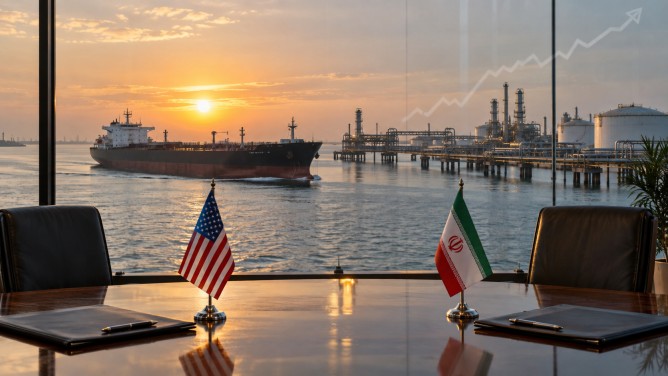
The recent rise in oil prices is poised to have significant impacts on global energy markets, as Brent crude futures increased by 1.7% to around $102 a barrel, and US West Texas Intermediate (WTI) crude for October also climbed by 1.7% to nearly $97 a barrel. Investors and stakeholders are closely monitoring the situation as potential diplomatic engagements between the United States and Iran are anticipated during the United Nations General Assembly in New York.
The prospect of talks between US President Donald Trump and Iranian President Masoud Pezeshkian has captured the attention of the market, as any diplomatic breakthrough could influence oil supply dynamics. The focus on these potential discussions underscores the volatile nature of oil prices, which are often sensitive to geopolitical developments.
In the Middle East, ongoing tensions continue to affect market stability. The region’s dynamics are further complicated by increased crude shipments through the Strait of Hormuz, a critical chokepoint in global oil supply. Saudi Arabia has ramped up its exports through the waterway, offsetting some concerns that arose from earlier disruptions in its East-West pipeline operations.
Tensions are compounded by the activities of Yemen’s Iran-aligned Houthi group, whose attacks have contributed to regional instability. In response to increased hostilities, China has called on Iran to curb Houthi aggression, highlighting the international dimension of the conflict.
Meanwhile, in Libya, oil production faces challenges as an armed group reportedly shut a valve on the Sharara crude pipeline. This action has led to a reduction in output by approximately 200,000 barrels per day, further adding to the complexities faced by the global oil supply chain.