
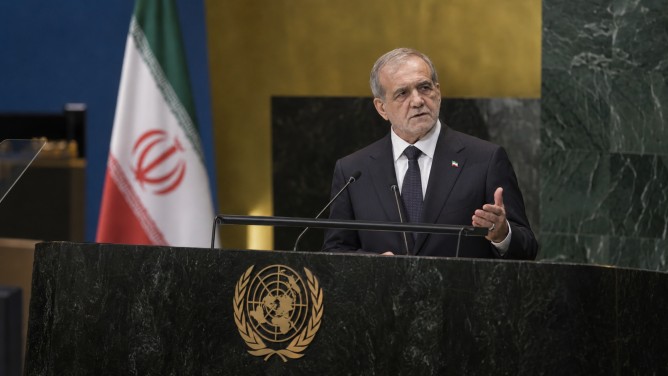
The upcoming participation of Iranian President Masoud Pezeshkian in the United Nations General Assembly in New York is set to reinforce Iran’s stance in international diplomacy, with significant implications for ongoing Middle Eastern tensions and geopolitical negotiations. As Iran seeks to assert its positions, this move could influence discussions around the Strait of Hormuz, a pivotal channel for global oil and gas transportation.
President Pezeshkian has committed to vigorously defending Iran’s rights and interests on the world stage, signaling a robust diplomatic engagement at the UN gathering. The Iranian delegation, led by Foreign Minister Abbas Araghchi, aims to spotlight Tehran’s perspective on international legitimacy and its claims to rightful interests, presenting a unified front amid regional disputes.
Araghchi arrived in New York ahead of the assembly and has already engaged in discussions with UN Secretary-General Antonio Guterres. These conversations are expected to set the tone for Iran’s diplomatic activities during the session, as Araghchi plans to meet with other foreign ministers and officials, potentially shaping the discourse on Middle Eastern issues.
This diplomatic push comes at a time of heightened tensions in the Middle East, particularly concerning the Strait of Hormuz. Iran’s conditions for reopening this strategic waterway have been conveyed through Qatar, juxtaposed against U.S. measures targeting Iranian ports. These developments underscore the critical nature of the discussions that Iran intends to pursue at the UN.
As the international community convenes in New York, Iran’s involvement in the General Assembly will likely have far-reaching effects on regional diplomacy and global energy markets. The outcomes of these engagements could redefine strategies and alliances, with Iran positioning itself as a central figure in the dialogue.