
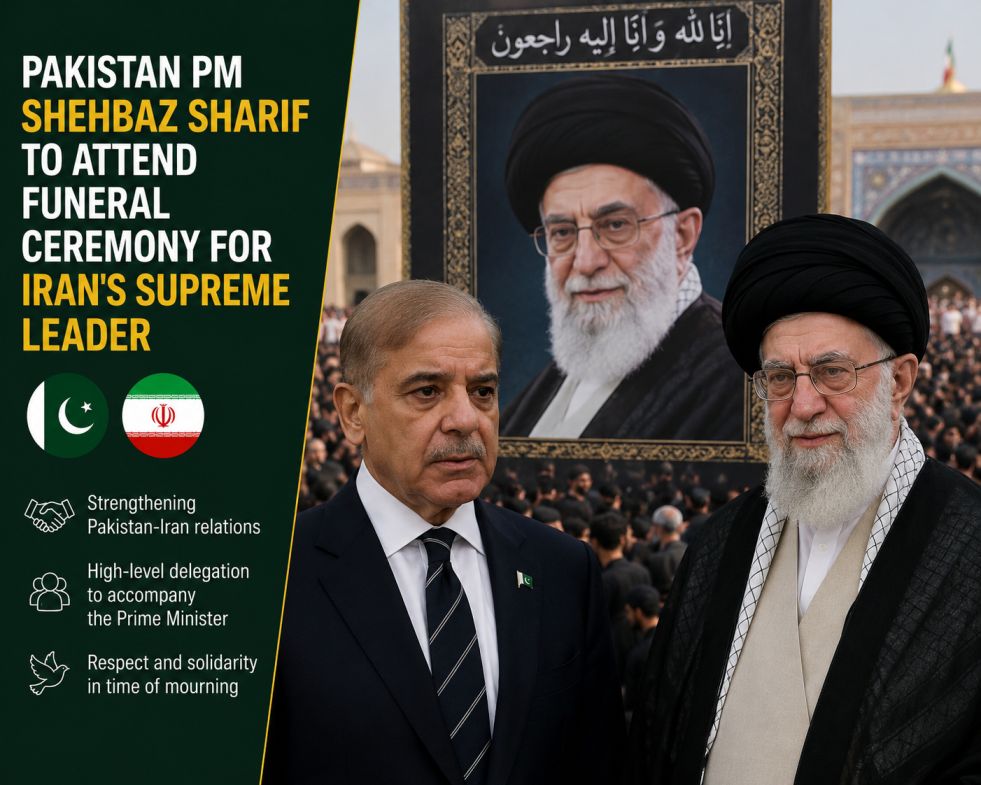
Prime Minister Shehbaz Sharif of Pakistan is set to embark on a diplomatic journey to Iran and Türkiye from July 3 to July 5, with his first stop in Iran to attend the funeral of Supreme Leader Ali Khamenei. This visit coincides with ongoing diplomatic discussions between the United States and Iran, aimed at easing regional tensions following recent negotiations. The Pakistani Foreign Ministry confirmed Sharif’s participation in the solemn ceremonies, which will gather global leaders in a show of respect and diplomacy.
The Iranian Foreign Ministry announced that representatives from approximately 100 countries will attend the funeral. High-profile attendees include Tajikistan President Emomali Rahmon, Georgian President Mikheil Kavelashvili, and Russia’s former president Dmitry Medvedev, now deputy chairman of the Security Council. China will be represented by He Wei, vice chairman of the Standing Committee of the National People’s Congress, while India’s delegation will include Bihar Governor Syed Ata Hasnain and Minister of State for External Affairs Pabitra Margherita.
Ali Khamenei, who became Iran’s second supreme leader in 1989, was a pivotal figure in expanding the country’s nuclear capabilities and forging regional alliances through allied groups. His death on February 28 was the result of a U.S.-Israeli military operation targeting Iran’s leadership and military infrastructure. Following his passing, Mojtaba Khamenei has assumed the role of supreme leader. The funeral events, commencing in Tehran and concluding on July 9 in Mashhad, Khamenei’s birthplace, are expected to draw significant political and diplomatic figures.
The backdrop of this significant event is marked by ongoing negotiations between Washington and Tehran, following a ceasefire that ended weeks of conflict. Talks are grounded in a memorandum of understanding reached last month, although Israel remains outside these discussions, expressing concerns that the current framework does not sufficiently address Iran’s nuclear ambitions. The funeral and its diplomatic engagements occur amid these complex geopolitical dynamics, underscoring the international community’s focus on the region.