
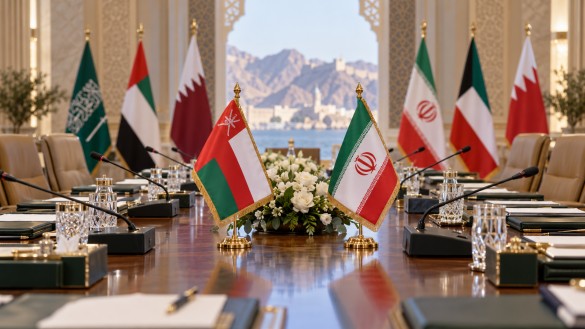
Oman’s Foreign Minister Badr Albusaidi has proposed a regional security agreement involving the six Gulf states, Iran, and Iraq to address longstanding security challenges in the Middle East. Speaking at Girton College, Cambridge, Albusaidi emphasized the need for Middle Eastern countries to take greater responsibility for their security rather than relying predominantly on the United States. He argued that excluding Iran from past security arrangements has contributed to regional tensions and hindered conflict resolution.
Albusaidi’s proposal includes a non-aggression pact among Gulf countries, Iran, and Iraq, highlighting the importance of dialogue and collective responsibility in maintaining regional stability. The minister pointed out that external powers have historically played a disproportionate role in shaping the region’s security policies, limiting the ability of neighboring countries to find common ground.
His remarks coincide with ongoing discussions in Tehran, where senior officials from Türkiye, Pakistan, and Saudi Arabia are engaging in talks focusing on regional security and preventing renewed conflict between the United States and Iran. These discussions also cover future security arrangements in the Middle East.
Central to Albusaidi’s proposal is the resolution of disputes affecting the Strait of Hormuz, a critical waterway for global energy shipments. He called for regional cooperation to develop security arrangements that ensure maritime safety and prevent further escalations.
Albusaidi also noted that previous negotiations between Washington and Tehran, which Oman mediated, had been progressing well and that an agreement seemed within reach. However, regional tensions remain high, with recent attacks on infrastructure and fears of renewed military confrontations adding to the complexity of the situation. Gulf countries are faced with difficult choices to protect their economies and maintain stability amid these challenges.
Despite the potential benefits, Albusaidi’s call for a regional security pact faces significant hurdles. These include deep-seated mistrust, Iran’s military activities, and concerns among neighboring countries about security threats. Any agreement would likely require extensive negotiations and assurances from all involved parties. Nonetheless, Albusaidi’s initiative underscores Oman’s commitment to fostering diplomacy and regional cooperation as Middle Eastern countries seek to reduce tensions and establish a more autonomous security framework.