
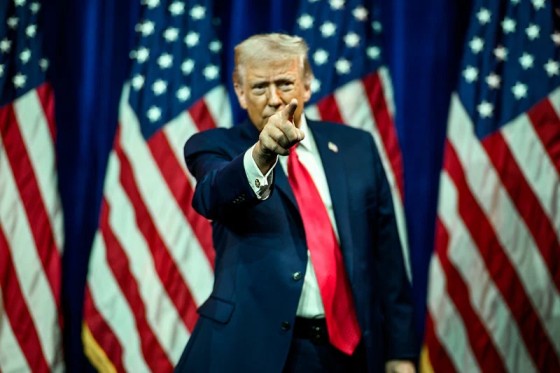
In a decisive message to Oman, U.S. President Donald Trump issued a stern warning about potential repercussions if the Gulf nation aids in efforts to regulate the Strait of Hormuz, a crucial passage for global oil transportation. During a cabinet meeting, Trump emphasized that the strait must remain accessible to all nations, underscoring that no single country should exert control over it. This statement follows reports of Iran and Oman potentially discussing the introduction of transit fees for ships navigating this strategic corridor.
Trump assured that the United States remains vigilant in overseeing the Strait of Hormuz to ensure freedom of navigation. He pointedly remarked that Oman would be expected to comply with international norms, warning of serious consequences should they deviate from cooperating. This stance comes amid heightened tensions in the region, exacerbated by the ongoing conflict involving the U.S., Israel, and Iran, raising concerns about the stability of global energy supplies and regional security.
The Strait of Hormuz is a vital maritime route through which nearly 20% of the world’s oil supply is transported. Given the geopolitical tensions, any disruption in this area could have significant implications for the global economy. Oman’s historical role as a mediator in regional disputes, particularly between Iran and Western powers, adds complexity to the current situation.
In addition, Trump accused Iran of purposefully stalling negotiations, suggesting that Tehran might be attempting to delay proceedings in anticipation of shifts in U.S. political dynamics with the upcoming midterm elections. This assertion further strains the already tenuous relations between the U.S. and Iran, with Oman caught in the middle due to its strategic location and diplomatic ties.