
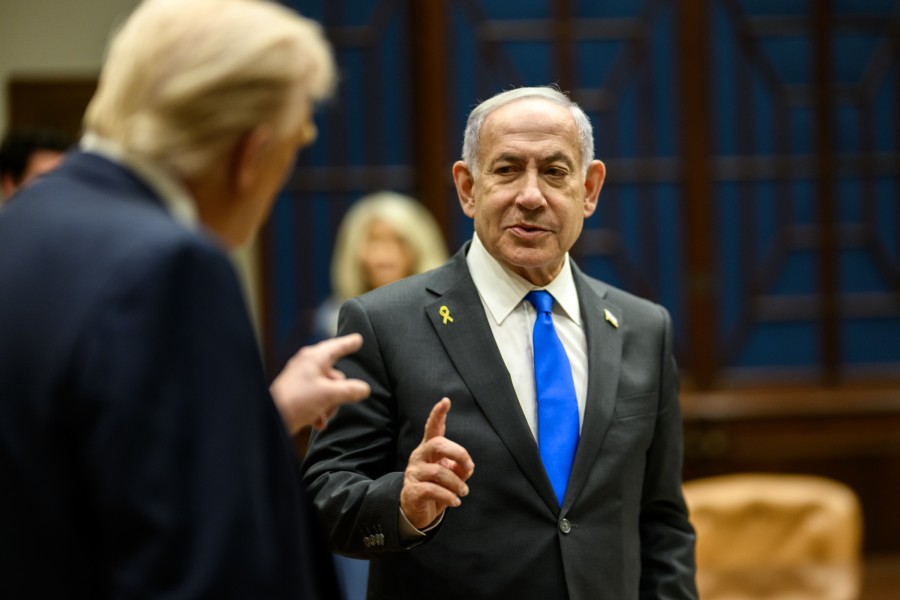
In a recent address to reserve combat officers in the Gush Etzion settlement bloc, Israeli Prime Minister Benjamin Netanyahu emphasized the necessity for Israel to bolster its domestic weapons production and reduce reliance on U.S. military support. Netanyahu acknowledged the enduring support from the United States but advocated for the establishment of an independent defense manufacturing system to meet the country’s military needs. He underscored that Israel’s ongoing confrontations with Iran and its affiliates necessitate the expansion of military capabilities and leadership development for future security.
Netanyahu’s statements coincide with discussions between Washington and Jerusalem about a new decade-long security cooperation framework. This framework aims to transition the partnership from a heavy reliance on military aid to a more balanced, reciprocal relationship. The prime minister’s remarks also reflect Israel’s concerns about being excluded from recent U.S.-Iran diplomatic negotiations. Notably, Israel was not part of the talks that led to a memorandum of understanding between Washington and Tehran, designed to mitigate hostilities and prevent future conflicts.
The agreement between the United States and Iran includes stipulations affecting various regional dynamics, such as in Lebanon, where Israeli forces are engaged in operations against Hezbollah. Iran has called for an Israeli withdrawal from Lebanese territories, but Israel maintains its stance of not withdrawing until all security threats are neutralized. This situation has highlighted the tensions regarding the extent of U.S. influence over Israeli military decisions. Recently, President Donald Trump suggested that the close alliance grants Washington substantial leverage over Israel’s regional actions.
Criticism from some Israeli officials has emerged concerning the U.S.-Iran understanding, particularly regarding the absence of concrete achievements in dismantling Iran’s nuclear and ballistic missile capabilities. The United States, however, has reiterated its commitment to preventing Iran from acquiring nuclear weapons and has indicated that further actions remain a possibility if negotiations do not succeed. U.S. Vice President JD Vance defended the agreement by highlighting the substantial military assistance provided to Israel and underscoring the strategic importance of maintaining the alliance between the two nations.