
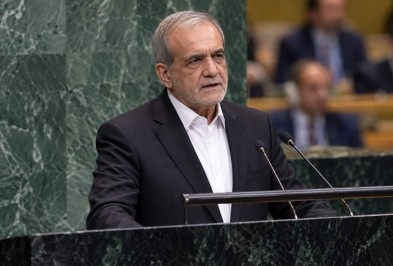
The ongoing tensions in the Strait of Hormuz, a critical waterway for global energy supplies, could see a resolution if Iran’s conditions for easing military and economic pressures are met. Iranian President Masoud Pezeshkian, addressing the United Nations General Assembly, emphasized Tehran’s willingness to engage in diplomacy, but firmly rejected negotiations conducted under duress.
During his speech, Pezeshkian criticized U.S. President Donald Trump, highlighting the strain on Iran due to the U.S.’s aggressive stance and the imposition of sanctions. Despite this, he reaffirmed Iran’s openness to dialogue, provided that such talks are free from threats or military coercion. This statement comes after Trump suggested potential further actions against Iran, yet also hinted at possible renewed discussions.
In a bid to defuse tensions, Iranian Foreign Minister Abbas Araghchi met with U.S. special envoy Steve Witkoff for a three-hour discussion at the UN General Assembly. These talks, facilitated by Qatar, focused on Iran’s demands for resolving the conflict, which include lifting economic sanctions and releasing Iranian assets.
Pezeshkian reiterated Iran’s commitment to a peaceful nuclear program, asserting that the country does not seek nuclear weapons. He called for regional cooperation on security matters, urging local countries to work together rather than depend on external forces.
The discussions around the Strait of Hormuz are particularly significant. Iran has indicated that the waterway could be reopened if its conditions are met, potentially stabilizing international shipping routes and energy markets that have been disrupted by the ongoing hostilities.
Despite the stark disagreements over sanctions, military pressure, and Iran’s nuclear ambitions, the recent diplomatic engagements signal that a path to dialogue remains viable. Pezeshkian’s remarks underscore Iran’s position of defense against what it perceives as aggression from the United States and Israel, while advocating for constructive negotiations to ease the regional and international tensions.