
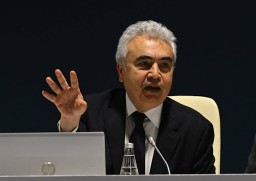
Central banks around the world are being forced to simultaneously confront inflationary pressures from energy supply disruptions and slowing growth caused by the same supply shock — one of the most challenging policy dilemmas in modern monetary history — the head of the International Energy Agency has observed. Fatih Birol, speaking in Canberra, said the Iran war’s energy crisis — equivalent to the combined force of the 1970s twin oil shocks and the Ukraine gas emergency — was recreating the stagflationary conditions that had confounded central bankers in the 1970s. He called for close coordination between energy policy and monetary policy.
Birol explained that the 1970s oil shocks had placed central banks in an agonizing position: raising interest rates to fight inflation risked worsening the economic slowdown caused by the supply shock, while cutting rates to support growth risked entrenching inflation. The Iran crisis was recreating this dilemma with even larger supply disruptions. He said central banks and energy ministers needed to be in close and continuous dialogue to ensure their respective policy responses reinforced rather than undermined each other.
The conflict began February 28 with US and Israeli strikes on Iran and has since removed 11 million barrels of oil per day and 140 billion cubic metres of gas from world markets. At least 40 Gulf energy assets have been severely damaged, and the Hormuz strait — through which approximately 20 percent of global oil flows — remains closed. The IEA deployed 400 million barrels from strategic reserves on March 11 in its largest emergency action.
Birol confirmed further releases were under consideration and said the IEA was consulting with governments across three continents. He called for demand-side policies including remote work, lower speed limits, and reduced commercial aviation. He met with Australian Prime Minister Anthony Albanese and said the challenge facing the Reserve Bank of Australia was emblematic of the dilemma facing central banks worldwide.
Trump’s 48-hour ultimatum to Iran to reopen the strait expired without result, and Tehran threatened retaliatory strikes on US and allied energy and water infrastructure. Birol concluded that coordinating energy supply policy and monetary policy was one of the most important and most difficult challenges created by the current crisis. He said the experience of the 1970s suggested that getting this coordination wrong could extend and deepen the economic damage of an energy shock for years beyond the immediate supply disruption.